
Field Notes: Why Vultures Wheel Over The Sheetla River
VARSHA SINGH

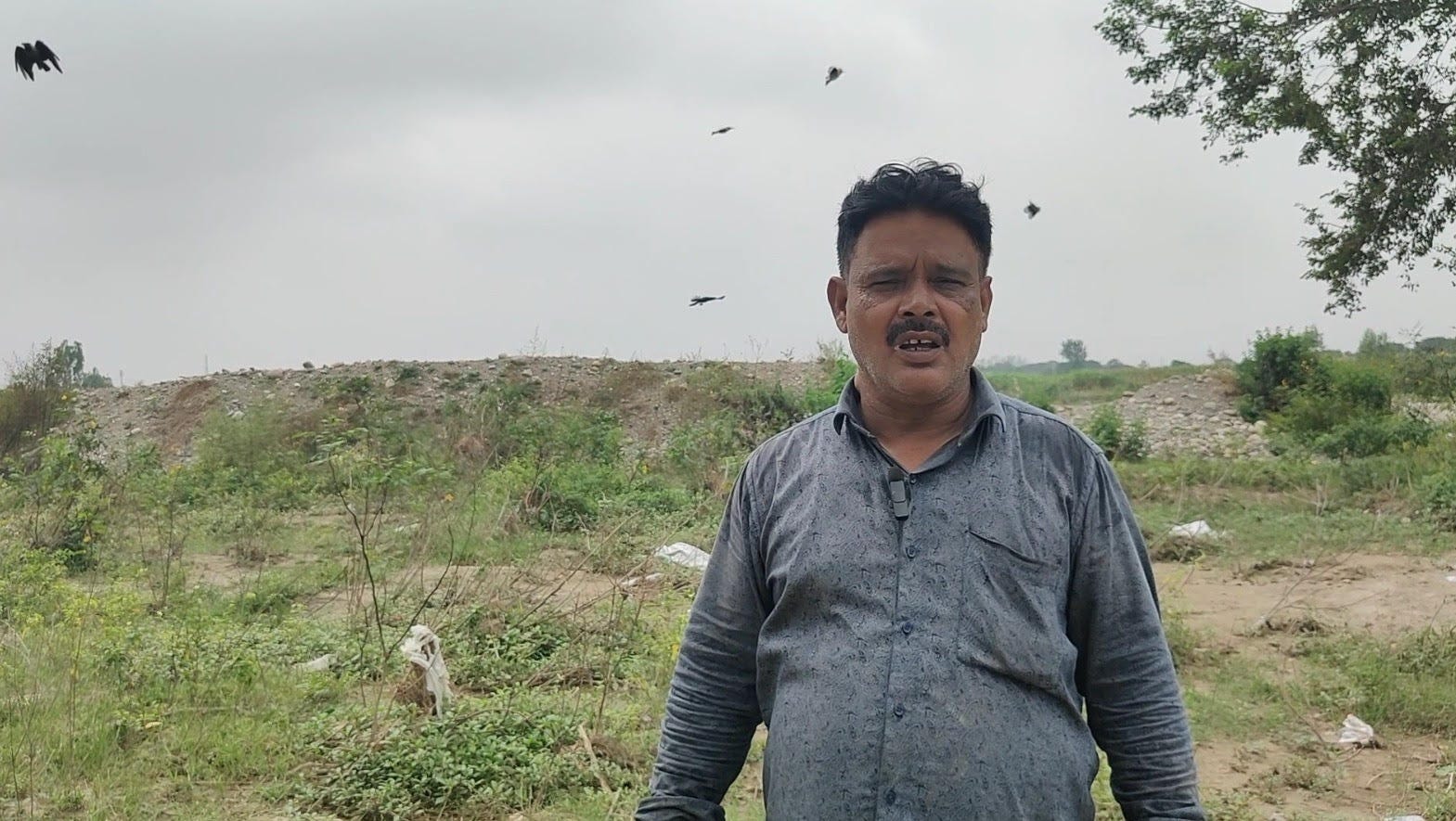
My recent investigation into how Hindu vigilante groups have been terrorising and beating Dalit and Muslim workers who clear animal carcasses began one September morning on the dry riverbed of the Sheetla, in the foothills of the Himalayas near Dehradun.
I was speaking with Irshad Ali, 48, as he and two others unloaded the carcass of a large animal from a vehicle and carried it down to the riverbed on the doorstep of Uttarakhand’s capital city.
Irshad was visibly tense. One of the vehicles his community used to transport sun-dried animal bones had recently been set on fire.
As we talked, he explained how his entire community made its livelihood on clearing carcasses—something they had done for generations. His father and forefathers did this work peacefully, but today, workers are increasingly targeted by Hindu vigilante groups.
Irshad pointed to the sky, where vultures circled overhead.
With us was Sunny Joshi, a raptor expert with the World Wide Fund for Nature-India. Joshi told me that one of the vultures nearby carried a satellite tag. It had flown from Corbett National Park, stayed in the Shivalik hills, and kept returning to the Sheetla riverbed again and again.
The reason: food.
This riverbed has become a critical feeding ground. Twenty-four raptor species visit, including eight endangered species listed by the International Union for Conservation of Nature (IUCN), a global network of scientists and experts.
Small birds, butterflies, and even the soil itself benefit from the work of these communities. Without them, the stench of rotting carcasses would spread. Disease would follow.
Irshad’s community brings in carcasses, removes the skin, and collects sun-dried bones with legal permits. As the vultures feed, the environment stays balanced. The electricity department has insulated high-tension wires to prevent electrocution, saving the birds.
Humans don’t appear to have much protection.
In late August, a vehicle carrying dried bones was set on fire, and workers were beaten. Instead of helping them, the police filed cases against the victims. Irshad shrugged.
“We’ve seen worse,” he said. “We are used to it.”
When the workers went on strike, cattle owners panicked. Who would bury the dead animals, and where?
On 23 September 2025, in Raipur, Dehradun, right-wing Hindu groups clashed with a team transporting carcasses. They tried to destroy the vehicle.
Rajesh Kumar Barman, a Dalit contractor, told me, “I am proud of our work. Generations have done this. I have never seen such chaos in the name of a cow.”
“It feels like this chaos is being created to weaken Dalit and Muslim communities,” said Barman. “The system cannot help us. Our sons and brothers are leaving this work.”
The workers are licensed by the local panchayat or village council. This is government work that saves crores: lifting and burying a dead animal costs around Rs 5,000. With 100 animals a day, the cost jumps to 1.5 crore a month.
Yet, from Dalit and Muslim workers to the police to the zila panchayat officers, everyone appears helpless. A few vigilantes disrupt centuries of tradition, and the law —and those meant to enforce it—appear inadequate to stop the attacks.
On the riverbed, I noticed tiny details: birds eating insects, butterflies swarming the nutrient-rich soil. The politics of terrorising the carcass clearers appears to disrupt the food chain itself.
And the dried bones? They end up as bone china, artefacts, and fertilisers. Products we all use—even those who torched the vehicles.
You can read Varsha Singh’s full story here.
Also read:
Field Notes: 'We Are Denied Dignity Even In Death'

Ramachandra Gond, 42, sat in a rented two-room house in Nabarangpur, about 50 km from his village, Malbeda, which he had f…
you make any kind of contribution - money - so difficult. i have tried unsuccessfully many times!